


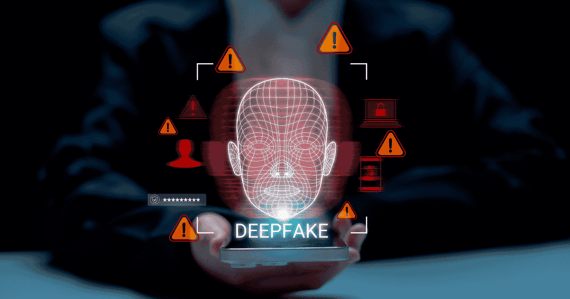
Your phone lights up. The caller name looks right. The voice sounds right. And the request hits you with urgency, “I need this wire sent now,” or “Send me that confidential file, I’m in a meeting.”
In that moment, most security habits fall away. You are not scanning a link. You are reacting to authority, pressure, and familiarity. That is exactly why the “deepfake CEO” scam is becoming the next evolution of business email compromise (BEC).
How AI voice cloning changes business fraud
BEC used to live mostly in inboxes. Attackers relied on spoofed domains, compromised email accounts, and convincing writing to move money or steal data. Businesses improved defenses with stronger filtering, banner warnings, and tighter email controls.
Now attackers are stepping around those barriers by going straight to the human layer with AI-generated voice.
With only a short audio sample pulled from public sources like webinars, interviews, marketing videos, or social media, criminals can recreate a voice that sounds close enough to trigger trust. Then they call the person most likely to act quickly, finance, payroll, HR, executive assistants, IT admins, or department leads.
Build a Fully Isolated Guest Network
This scam succeeds because it targets how work actually gets done.
- Authority pressure: People are trained to respond quickly to leadership requests.
- Time stress: Calls are often timed for end of day, travel days, weekends, or holidays.
- Emotional manipulation: The voice may sound frustrated, rushed, or worried, which pushes you to comply.
- No easy “headers” to check: You cannot inspect a voice call the same way you can inspect an email.
Audio deepfakes are hard to spot
You might catch obvious flaws sometimes, odd pacing, slightly robotic tone, strange background noise, or unnatural pauses. But relying on your ears is not a real defense, because the technology keeps improving.
The safest assumption is simple: a familiar voice is no longer proof of identity.
The new rule for money and sensitive data
If the request involves money, credentials, account changes, or confidential information, treat voice calls as untrusted until verified.
Build a verification protocol your team can follow without hesitation:
1. Require a second channel confirmation
If a request comes by phone, confirm it through a different path that the caller cannot control, for example:
- Call back using a known internal number from your directory
- Confirm through an approved internal messaging method
- Confirm through a ticketing or approval workflow
2. Add friction on purpose
Attackers rely on speed. You want predictable speed bumps:
- Dual approval for wires and vendor changes
- A short holding period for new payee setup
- Written confirmation for any banking detail updates
3. Use role-based "challenge question"
For high-risk actions, use a shared verification prompt known only to the right people. Keep it rotated and limited to those who truly need it.
4. Train for vishing, not just phishing
Security awareness training must include voice-based scenarios. Practice what to do when:
- “The CEO” demands urgency
- “IT support” asks for a code
- “A vendor” requests banking updates
The goal is not to scare your team. It is to make verification normal.
Create a Deepfakes are also a reputation threat
Voice cloning is not only about financial fraud. A fake recording of an executive can spread quickly and damage trust before you can respond. Having a documented internal verification process also helps your organization respond faster if a deepfake is used publicly.
Ready to tighten your defenses against deepfake fraud?
We help businesses build verification workflows that stop voice cloning scams without slowing down real operations.
Call us today at (407) 995-6766 or CLICK HERE to schedule your free discovery call.

.png?width=520&height=294&name=Blog%20Image%20Template%20Size%20(1).png)